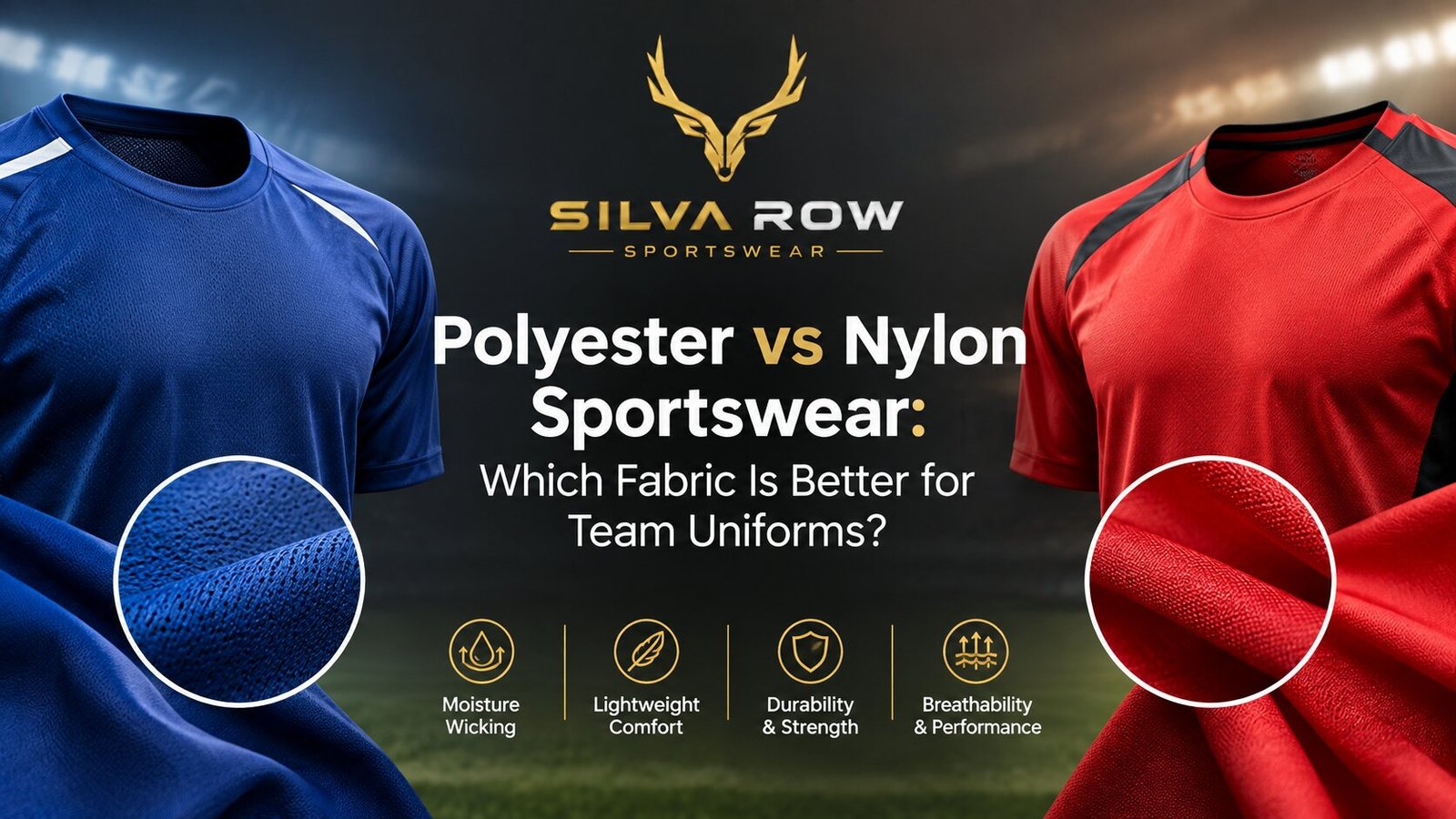
You’ve picked your colours. You’ve sorted the logo. Now comes the question most teams skip: what fabric should the kit be made from? It matters more than you think. The wrong fabric can leave players soaked, itchy or wearing faded shirts by mid-season. The right one keeps them dry, comfy and looking sharp in every match photo. The two big names in sportswear are polyester and nylon. Both are synthetic, both are light and both are used by top brands. But they behave very differently on the pitch. This guide on polyester vs nylon sportswear breaks down the differences in plain English, so you can choose the right fabric for your team. For most team uniforms, polyester is the better choice. It dries faster, holds bright colours longer, works with full-colour sublimation printing and costs less. Nylon wins on strength and softness. It’s a great pick for items that face lots of rubbing and rough use, like tracksuit jackets, windbreakers and some shorts.
Many teams end up using both. Now let’s look at why.
What Is Polyester?
Polyester is a synthetic fabric made from plastic-based fibres. It’s the most common fabric in sportswear today, and you’ll find it in almost every football shirt, cricket kit and running top.
Here’s what makes it popular:
- It absorbs very little water, so sweat moves to the surface and dries fast
- It holds dye well, so colours stay bright wash after wash
- It handles sunlight well, so kits don’t fade quickly outdoors
- It keeps its shape and doesn’t shrink
- It’s affordable, even for large bulk orders
The main downside? Polyester can hold on to odours if it isn’t washed soon after use. Modern anti-odour finishes help, but it’s worth knowing.
What Is Nylon?
Nylon is also a synthetic fabric. It was first made as a silk replacement, which explains its smooth, soft feel.
Here’s what nylon does well:
- It’s very strong and resists tearing
- It stands up to rubbing, scraping and rough play
- It feels soft and smooth against the skin
- It stretches well and springs back into shape
But nylon has some weak spots for team kits. It soaks up more water than polyester, so it dries slower when players sweat. It can fade faster in strong sunlight. It’s also usually more expensive, and it doesn’t work with sublimation printing.
Polyester vs Nylon Sportswear: Side by Side
Feature | Polyester | Nylon |
Drying speed | Fast | Slower |
Sweat handling | Excellent | Good |
Strength | Good | Excellent |
Softness | Good | Very soft |
Stretch | Moderate | High |
Colour hold in sunlight | Excellent | Fair |
Sublimation printing | Yes | No |
Cost | Lower | Higher |
Why Printing Changes Everything
This is the point many teams don’t know about. Sublimation printing turns ink into a gas that bonds with polyester fibres. The design becomes part of the fabric. It won’t crack, peel or wash out.
That’s how teams get full-colour kits with gradients, patterns, sponsor logos and player names all printed in one go. And it only works on polyester.
With nylon, you’re limited to screen printing, heat transfer or embroidery. These still look good, but they sit on top of the fabric and can wear over time. If your kit design is bold and colourful, polyester is the clear winner.
Which Fabric Suits Each Part of Your Kit?
You don’t have to pick one fabric for everything. Here’s how we usually match fabric to kit:
- Match shirts and jerseys: polyester, for fast drying and sublimated designs
- Shorts: polyester for most sports, nylon blends for extra toughness
- Training tops: polyester mesh for airflow
- Tracksuit jackets: polyester for team colours, nylon for a smooth, tough outer layer
- Windbreakers and rain jackets: nylon, for strength and wind protection
- Compression wear: nylon blended with spandex, for stretch and a soft feel
- Socks: polyester or nylon blends, for stretch and long life
What About Blends?
Blends give you the best of more than one fabric. A little spandex added to polyester or nylon brings stretch for a better fit. A polyester and cotton blend feels softer for warm-up tops and casual team wear.
Blends are common in gym wear, compression tops and tracksuits. Tell your manufacturer how the kit will be used, and they can suggest the right mix.
Think About Your Climate
Where your team plays matters. In hot, humid weather, fast drying is key, and polyester handles sweat better. For cold, windy training sessions, a nylon outer layer blocks the wind and stands up to rough use.
Cost and Bulk Orders
If you’re ordering kits for a full squad, an academy or a whole school, cost adds up fast. Polyester is usually cheaper to make, print and replace. That leaves more budget for extras like tracksuits, bags and socks.
Our Advice for Team Orders
At Silva Row, we make custom sportswear in Sialkot for clubs, academies, schools and brands. When teams ask us about polyester vs nylon sportswear, our advice is simple. Go with polyester for match kits and training wear. Add nylon where toughness matters most, like jackets and outer layers.
Not sure what your team needs? Tell us your sport, your climate and how often the kit gets washed. We’ll suggest the right fabric and send you a sample before we make anything in bulk.
CTA Button: Get a Quote
Frequently Asked Questions
Is polyester or nylon better for football kits?
Polyester is better for most football kits. It dries fast, keeps colours bright and works with sublimation printing for full-colour designs, names and numbers.
Does nylon or polyester last longer?
Nylon is stronger and resists tearing and rubbing better. Polyester lasts well too, and it holds its colour and shape better in sunlight and washing.
Which fabric is better for hot weather?
Polyester is better for hot weather. It absorbs less water, so sweat dries faster and players stay cooler and drier during long matches and training.
Can you print team logos on nylon sportswear?
Yes, but not with sublimation. Nylon works with screen printing, heat transfer and embroidery. For full-colour printed designs, polyester is the better choice.
Is polyester sportswear cheaper than nylon?
Usually, yes. Polyester costs less to make and print, which helps a lot when you’re ordering kits in bulk for a full team or academy.