If you’ve spent any time researching sportswear manufacturing, you’ve probably run into the name Sialkot more than once. It’s a small city in Punjab that somehow produces a huge share of the world’s sports gear, from footballs to gloves to full team kits, and it’s done that for decades. For a club, gym chain, school, or corporate team looking to place a bulk sportswear order, Sialkot is usually where the search ends up anyway. The question isn’t really whether to source from there. It’s how to do it without wasting time or money on a first order that goes sideways.
This guide covers what actually matters when placing a bulk sportswear order from Sialkot, from picking the right product mix to understanding fabric options to getting sizing right across a big group of people.
Why Sialkot Specifically
Sialkot’s sportswear industry didn’t happen by accident. Generations of stitching and manufacturing expertise are concentrated in one place, which means suppliers there are used to working with international buyers, understand export logistics, and have production lines set up specifically for customized, mid- to large-volume orders. That’s different from ordering off a generic wholesale catalog, where you’re picking from whatever’s already made rather than getting something built to your club or company’s actual specs.
The practical upside for a buyer is choice. A single Sialkot-based manufacturer can often cover an entire order in one place: tracksuits, hoodies, sweatshirts, training tees, and accessories like caps and socks, instead of you juggling five different suppliers for one team’s gear.
Figuring Out What You Actually Need
Before requesting quotes, it helps to separate match day gear from everyday and training gear. A club or company placing a bulk order usually needs a mix, not just one product type. Browsing a full sportswear collection is a good starting point since it shows the range of what’s realistic to combine into one order, sports uniforms, training kits, and warm-up gear included.
Winter fixtures or early morning training sessions usually call for something warmer on top of the match kit. A tracksuit collection is worth reviewing alongside your main order, since bundling warm-up wear with match kits into a single production run tends to bring costs down compared to ordering them separately later.
Fabric Decisions That Actually Matter
Fabric quality is where budget sportswear and durable sportswear part ways. Cheaper poly blends might look fine in a product photo but pill, sag, or lose shape after a handful of washes. Sialkot manufacturers typically offer a range of fabric weights and blends depending on the product: cotton-polyester blends for hoodies and sweatshirts, lighter interlock or poly spandex for performance wear, and heavier brushed fabrics for tracksuits meant for colder months.
A few questions worth asking your supplier directly:
What’s the fabric weight in GSM, since this affects both durability and how warm or breathable a garment feels?
Is the fabric pre-shrunk or treated, since untreated fabric can change shape noticeably after the first wash?
Can you get a physical swatch or sample before committing to the full order, since photos rarely tell the whole story on texture and weight?
Getting Sizing Right for a Group Order
This is where a lot of first-time bulk buyers underestimate the work involved. A staff uniform order or a club roster usually spans a wide range of body types, not just small, medium, large. Rather than guessing, send out an actual size chart and have people measure against it, since sizing standards vary between manufacturers and casual clothing sizes don’t map cleanly onto athletic cuts.
A good supplier will let you mix sizes within one order without extra charges or splitting it into separate production batches. If pricing changes based on size distribution, that’s worth clarifying up front rather than after your quote arrives.
How the Ordering Process Usually Works
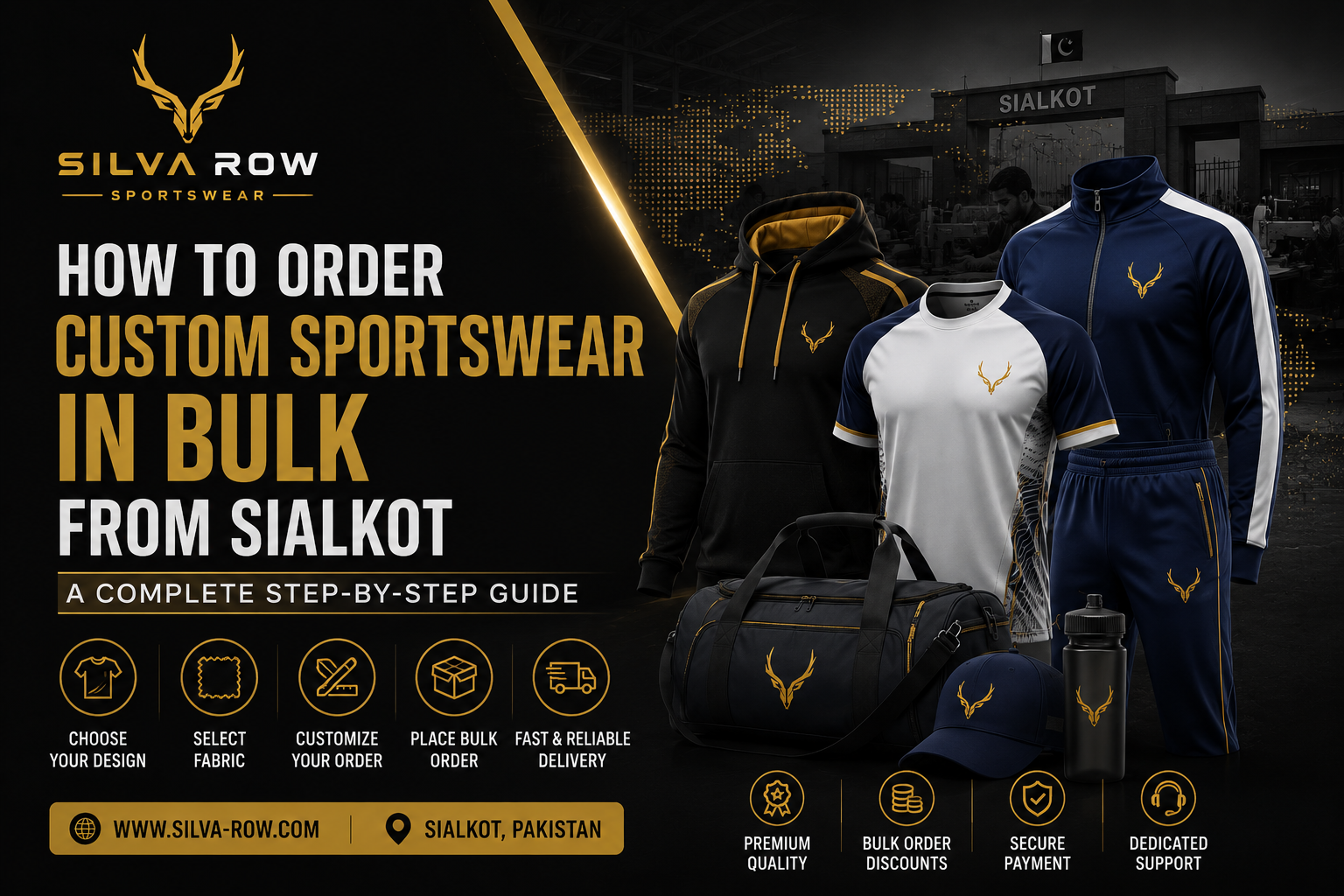
Once you know roughly what you need, the process itself tends to follow a fairly predictable path. You share the product types, quantities, and any branding or design requirements with the supplier. They come back with a quote and, for custom designs, a digital mockup to approve before anything goes into production. For larger orders, a physical sample is worth requesting so you can check fit, fabric, and stitching quality firsthand rather than relying on a screen.
After sign-off, production runs on the full order, followed by quality checks before packing and shipping. If you’re not sure where to start that conversation, reaching out directly through the contact page is usually faster than going back and forth over email, especially if you have a deadline tied to a season start or company event.
Budgeting for the Order
Cost per unit comes down to a combination of fabric quality, order size, garment type, and how much customization is involved: logos, player names, sponsor branding, and so on. Larger orders bring the per-unit price down significantly, so it’s worth checking if other departments, teams, or branches within your organization need similar gear around the same time. Combining orders into one production run is one of the simplest ways to cut costs without cutting quality.
It’s also worth checking a specific hooded sweatshirt option if your order includes off-field or casual wear alongside performance kits, since it shows how the same fabric and branding approach can extend beyond just match day uniforms into everyday team apparel.
Timing Your Order
Sialkot manufacturers deal with a steady flow of orders year-round, including large export volumes, so timing matters more than people expect. Ordering two to three months ahead of when you actually need the gear gives you room for sample approval, revisions, and any production delays without scrambling at the last minute. Rush orders are usually possible, but they tend to cost more and leave less room to fix mistakes before delivery. For more on planning bulk orders and seasonal buying, our blog has additional guidance worth a look.
Final Word
Ordering bulk sportswear from Sialkot works best when you treat it as a partnership rather than a one-off transaction. Nail down your fabric preferences, get sizing right across your whole group, ask for samples before committing to the full run, and give the process enough lead time. Do that, and a bulk order stops being a stressful once-a-year scramble and starts being a routine part of running your club, team, or company.
Frequently Asked Questions
Why is Sialkot a major hub for sportswear manufacturing?
Decades of stitching expertise and export infrastructure are concentrated there, letting manufacturers handle custom, large-volume orders efficiently for international and local buyers alike.
What is the typical minimum order quantity for bulk sportswear?
It varies by supplier and product, often 10 to 20 pieces per design. Smaller teams can usually combine orders to qualify.
How long does a bulk sportswear order take to produce?
Generally two to four weeks after design approval, depending on order size. Ordering two to three months ahead avoids last-minute delays.
Can different garment types be combined in one bulk order?
Yes, tracksuits, hoodies, and uniforms can usually be produced together in one run, which often reduces the overall per-unit cost.
Is it possible to get a sample before placing a full order?
Most manufacturers offer sample approval before full production, especially for larger orders. Always request one for custom designs.
Does bulk ordering really reduce the cost per garment?
Yes, significantly. Production costs drop as order size increases, so combining teams or departments into one order helps everyone save.