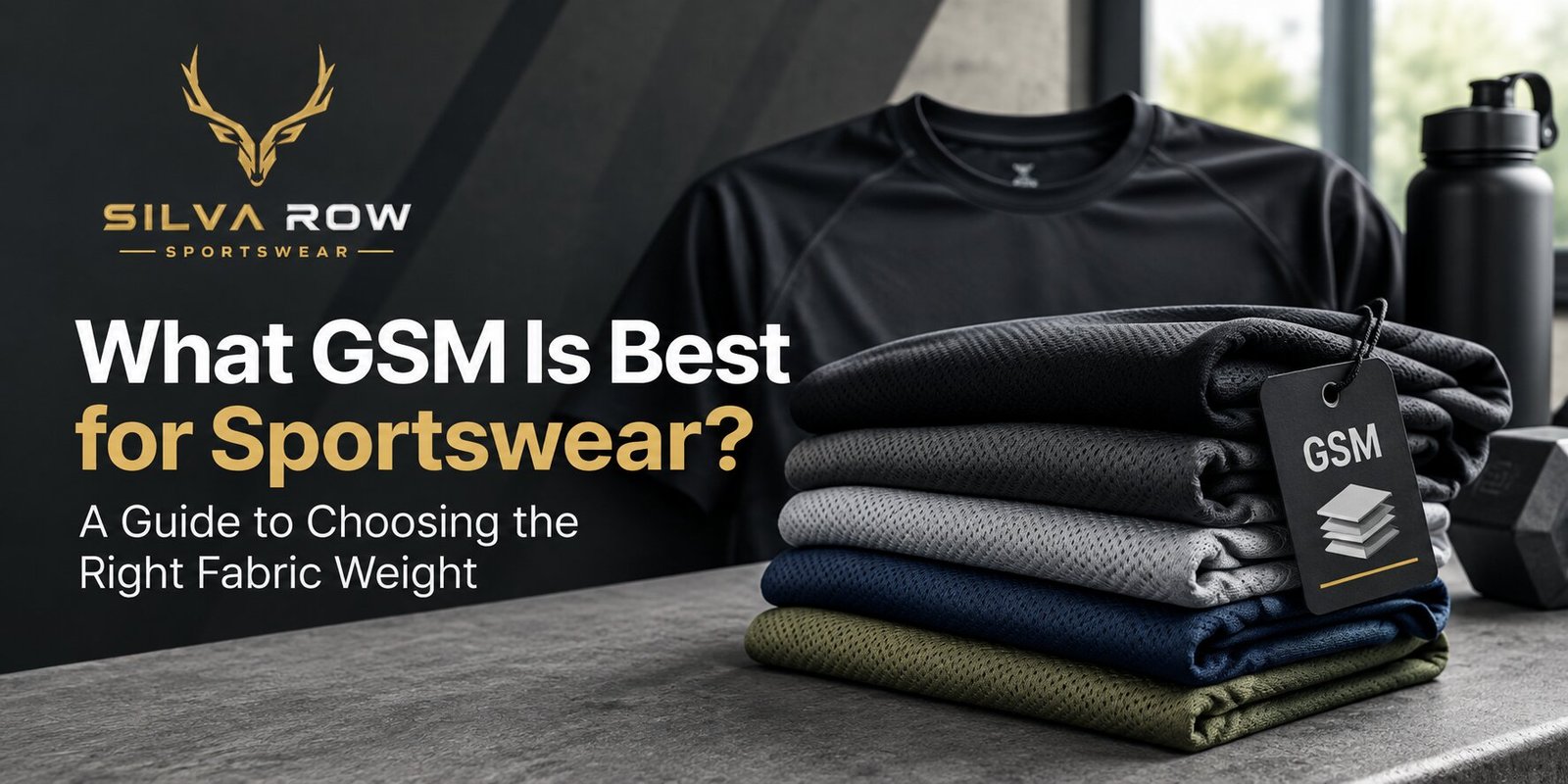
Ask a sportswear maker for a quote, and one of the first things they’ll ask is: what GSM do you want?
Most people have no idea. That’s fine. But getting it wrong can cost you. Go too heavy, and players sweat through every session. Go too light, and shirts tear or turn see-through after a few washes.
This guide explains GSM in simple words and shows you the best GSM for sportswear, garment by garment. By the end, you’ll know exactly what to ask for when you place your next team order.
What Does GSM Mean?
GSM stands for grams per square metre. It tells you how much one square metre of fabric weighs.
The rule is simple:
- Low GSM means lighter, thinner fabric
- High GSM means heavier, thicker fabric
A light running vest might be around 100 to 130 GSM. A warm winter hoodie can be 300 GSM or more. Same idea, very different feel.
Why GSM Matters for Sportswear
Fabric weight affects almost everything about how a garment performs:
- Breathability: lighter fabric lets more air through
- Drying time: thinner fabric dries faster
- Warmth: heavier fabric holds in more heat
- Strength: heavier fabric usually handles more wear and tear
- Feel and drape: GSM changes how a garment hangs and moves
- Cost: more fabric weight usually means a higher price
So the right GSM depends on the sport, the garment and the weather your team plays in.
The Best GSM for Sportswear by Garment
Here’s a quick guide to the fabric weights most sportswear makers work with. Treat these as starting points, not strict rules.
Garment | Typical GSM Range |
Running vests and singlets | 100 to 140 |
Football and soccer jerseys | 120 to 160 |
Basketball jerseys (mesh) | 140 to 180 |
Cricket shirts | 140 to 180 |
Gym t-shirts | 140 to 180 |
Sports shorts | 140 to 200 |
Compression wear | 180 to 250 |
Rugby jerseys | 200 to 280 |
Tracksuits | 200 to 300 |
Hoodies and fleece tops | 280 to 350+ |
Lightweight Fabrics: 100 to 150 GSM
This is the go-to range for fast, sweaty sports. Think running, football, badminton and summer training.
Lightweight fabric breathes well and dries quickly, so players don’t feel weighed down. It’s also great for sublimated match kits, where bright, full-colour designs are printed right into the polyester.
The trade-off? Very light fabric can wear out faster in contact sports, and anything under 100 GSM may look a little see-through in light colours.
Midweight Fabrics: 150 to 220 GSM
Midweight fabric is the all-rounder. It’s light enough to stay cool but strong enough for daily use.
You’ll find it in gym wear, cricket shirts, training tops, shorts and compression wear. It holds its shape well, feels solid in the hand and lasts through plenty of washes.
If you’re unsure where to start, midweight is often the safest choice for general training kits.
Heavyweight Fabrics: 220 GSM and Up
Heavier fabric is built for warmth and toughness. Rugby shirts, tracksuits, hoodies and warm-up jackets all sit in this range.
It handles pulling, grabbing and rough play better than light fabric. It also keeps players warm on cold mornings and during breaks in play. But it’s not ideal for high-intensity sessions in hot weather, since it holds more heat and dries slower.
How Climate Changes the Right GSM
Where your team plays matters as much as what they play.
- Hot, humid places: stay at the lighter end, around 120 to 150 GSM for jerseys, with mesh panels for airflow
- Mild weather: 140 to 180 GSM works well for most kits
- Cold weather: add heavier layers like 250 to 300 GSM tracksuits or fleece tops over lighter match wear
Many teams in hot countries order two sets: a light kit for summer and a heavier training layer for winter.
GSM Isn’t the Only Thing That Matters
Two fabrics with the same GSM can feel completely different. That’s because fabric type and knit style play a big role too.
- Fabric type: polyester dries faster than cotton at the same weight
- Knit style: mesh and eyelet knits breathe much better than smooth, tight knits
- Stretch: adding spandex changes the fit and feel, not just the weight
- Finish: moisture-wicking and anti-odour finishes affect comfort during play
So when you ask for a GSM, also ask about the fabric and knit.
How to Check GSM Before You Order
Don’t guess. Before placing a bulk order:
- Ask the maker to confirm the GSM in writing for each garment.
- Request fabric swatches or a sample garment.
- Feel the fabric, hold it up to the light and stretch it gently.
- Wash the sample a few times to check shrinkage, fading and shape.
A good manufacturer will be happy to walk you through all of this.
Our Advice for Team Orders
At Silva Row, we make custom sportswear in Sialkot for clubs, academies, schools and brands. When teams ask us for the best GSM for sportswear, we start with three questions: what sport, what weather and what garment?
From there, we suggest the right fabric weight and send you a sample before any bulk production starts. No guesswork, no surprises.
CTA Button: Get a Quote
Frequently Asked Questions
What is the best GSM for football jerseys?
Most football jerseys work best between 120 and 160 GSM. This range stays light and breathable, dries fast and suits sublimation printing for team designs.
Is higher GSM better quality?
Not always. Higher GSM means thicker fabric, not better fabric. For fast sports, lighter fabric often performs better. Quality depends on the fibre, knit and stitching.
What GSM is best for hot weather sportswear?
For hot weather, aim for around 120 to 150 GSM in breathable polyester or mesh. It keeps players cooler and dries quickly during long sessions.
What GSM should a tracksuit be?
Most tracksuits sit between 200 and 300 GSM. Lighter options suit spring training, while heavier ones give more warmth for cold mornings and winter sessions.
How do I find the best GSM for sportswear for my team?
Think about the sport, the garment and the weather. Then ask your manufacturer for samples at different weights before committing to a full bulk order.